
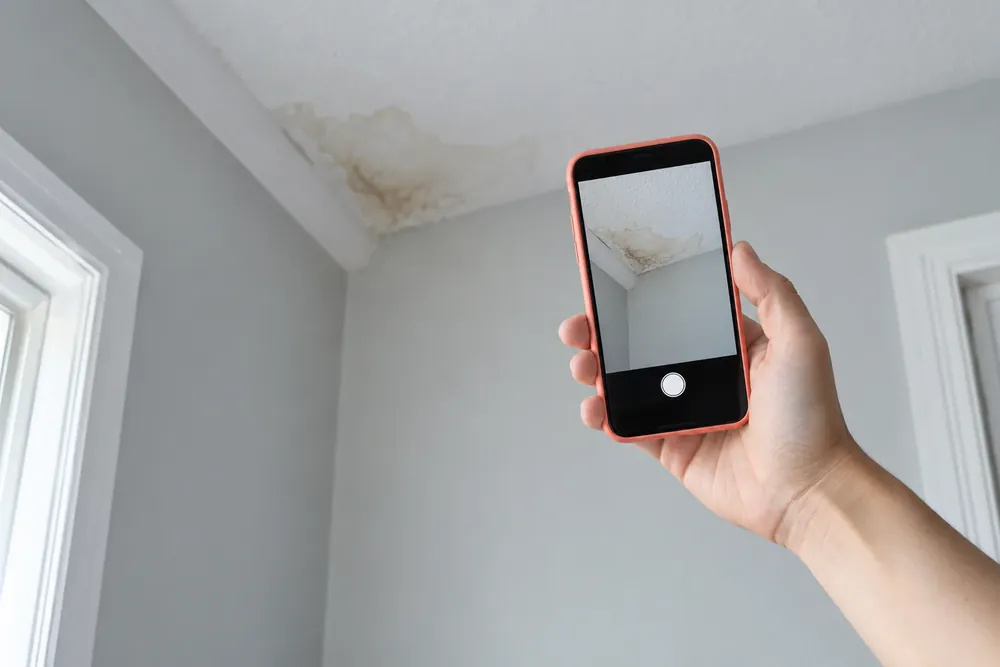
Many homeowners assume every leak is covered. Photos, moisture readings and a written restoration scope document the damage without establishing coverage. Water removal and drying address the wet house; coverage depends on the cause, policy wording and insurer's review.
Sudden Accidents and Gradual Leaks
Document when you discovered a plumbing or appliance leak and what you saw. A supply hose that breaks at once differs from a faucet connection that has seeped for months. Keep dated observations and any plumber's findings with photos of the visible source and affected materials.
Repairing the failed fixture and restoring the soaked room are also separate expenses. Record both separately in the written scope and itemized receipts. Keep water damage home insurance documentation focused on the visible damage and work performed.
Document Water Entering From Outside
Water entering from outside at ground level should be described accurately, without assuming its insurance category. Record where the water appeared and which rooms and materials were affected.
A drain backup also needs its own documentation. Keep the technician's written scope with dated photos of the affected areas. Your insurer applies your policy to the documented facts.
How Much Does Home Flood Insurance Cost?
Your insurer determines insurance pricing and coverage; restoration records document the cleanup scope and charges. Keep the written scope and itemized invoices separate from insurance quotes so the records describe the work proposed or completed.
Call for Cleanup and Document the Damage
Call about active water damage now. Keep dated notes, photos and receipts to document the visible damage and cleanup work.
During the call, describe where water appeared, whether it is still entering and any electrical or ceiling hazards. Stay clear of wet electrical equipment and sagging ceilings. Shut off a leaking water supply only when the valve is safely accessible.
One of our local water damage restoration partners will explain the proposed cleanup, drying records and charges before work begins. Your technician documents conditions and the work scope; your insurer decides coverage. For water damage restoration insurance documentation, keep photos, moisture readings, the written scope and itemized invoices together.
Photograph the Damage Without Delaying the Call
Photograph the affected rooms and belongings from a safe position to preserve a record of visible damage. You can share observations during the call, so collecting a complete photo set isn't a condition for starting cleanup.
- Take a wide view showing which room is affected.
- Add close views of stains, swollen trim, wet flooring and damaged belongings.
- Record the visible leak source without guessing at a hidden cause.
- Save appliance labels or item details when safely accessible.
- Keep dated notes of what you noticed and copies of repair receipts.
For a ceiling water damage insurance claim, include the room below and visible damage above only where access is safe. Your technician's moisture readings add information a photograph cannot show. A photograph of a stain alone doesn't establish whether the leak was sudden or longstanding.
Condo and Townhouse Records Need the Governing Documents
Condo and townhouse restoration records should identify the damaged component and its location. Keep the declaration and relevant master-policy information alongside photos, moisture readings and the written scope.
A shared roof or adjoining wall alone doesn't establish whose policy applies. Notify the association manager about affected shared components and request the declaration and relevant master-policy information while cleanup is being arranged. Each insurer reviews its own coverage; restoration records document the damage.